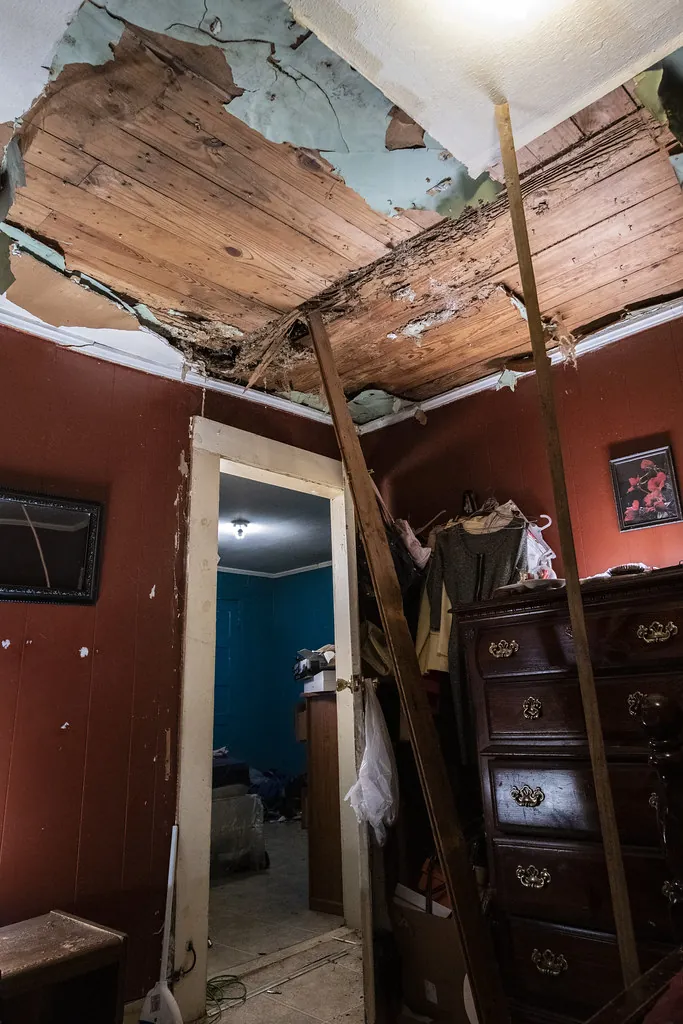
Sudden versus gradual
Most homeowner policies cover sudden and accidental discharge of water — a supply line that bursts, a water heater that fails, a frozen pipe that splits. Many exclude or limit damage from leaks that continued over weeks or months. Flooding from surface water or a rising river is excluded and normally requires a separate flood policy. Where your loss falls on that line is a coverage question; once it’s accepted, the amount is often where the real dispute begins.
Where water estimates fall short
- Drying equipment and days of drying that don’t match the moisture readings.
- Baseboards, cabinets and flooring left in place even though they were saturated.
- Continuous flooring that runs through several rooms, priced for only one.
- Insulation, subfloor and framing that were never moisture-mapped.
- Mold remediation capped by a policy sub-limit without explaining how it was applied.
- Contents cleaning, pack-out and storage omitted entirely.
Documentation that holds up
Good water claims are built on readings. Moisture maps, thermal images and drying logs show where water went and how long materials stayed wet. If you’re early in the claim, keep every mitigation invoice and ask your restoration company for its drying records. Those records become key exhibits if the claim goes to appraisal.
Freeze-related water losses
Hard freezes like the Christmas 2022 cold snap and the January 2024 freeze left many Tennessee homes and businesses with burst pipes. Those claims raise their own questions about heat maintenance and vacant buildings. Our dedicated ice storm & freeze appraisal page covers them in detail.
Frequently asked questions
Will appraisal decide whether my leak was sudden or long-term?
Generally no. Whether a leak is covered is a coverage question. Once coverage is accepted, appraisal can resolve how much the covered damage costs to fix.
Is mold covered?
Many policies limit mold coverage to a sub-limit or cover it only when it results from a covered water loss. Read the mold endorsement and the limit on your declarations page.
How quickly should I start drying?
Immediately. Policies require reasonable steps to prevent further damage, and fast mitigation also keeps the scope of the loss smaller.